
What Makes a Piano Go Out of Tune?
A piano is a remarkable blend of craftsmanship, engineering, and artistry. But like any finely tuned instrument, it doesn’t stay perfectly in tune forever. Whether you’re a casual player at home, a church musician, or a conservatory student, understanding why pianos drift out of tune can help you care for your instrument and extend its life.
1) Time
Even when untouched, a piano is constantly responding to its environment. Wood expands and contracts with daily humidity changes, and strings gradually lose tension. Over time, this natural drift causes the instrument to sound less precise.
Home pianos: Tune 1–2 times per year.
Churches and schools: Tune 2–4 times per year, since these spaces often experience more environmental fluctuations.
Think of tuning as routine maintenance—like changing the oil in a car. Even if you don’t drive much, the car still needs care.
2) Playing
Pianos are meant to be played, and regular use is actually healthy for the instrument. The vibration of strings and movement of mechanisms keeps everything active. However, heavy playing accelerates the need for tuning.
Casual use: A family piano played a few times a week may hold tuning longer.
Intense use: University practice rooms or performance halls, where pianos are played for hours daily, often require tuning every few weeks or months.
The more you play, the more the strings stretch and shift—so frequent tuning is part of keeping the piano performance-ready.
3) Changes in Humidity
This is the single biggest culprit behind tuning instability. A piano is primarily made of wood, which is highly sensitive to moisture.
Stable environments: In modern homes with humidity control, a piano can stay in tune for years.
Unstable environments: Churches, schools, or older buildings with fluctuating temperature and humidity can cause a piano to go out of tune in just weeks.
Pro tip: Consider a humidity control system, such as a PianoGuard, to protect your instrument. It helps stabilize the wood and prolongs both tuning stability and the piano’s overall lifespan.
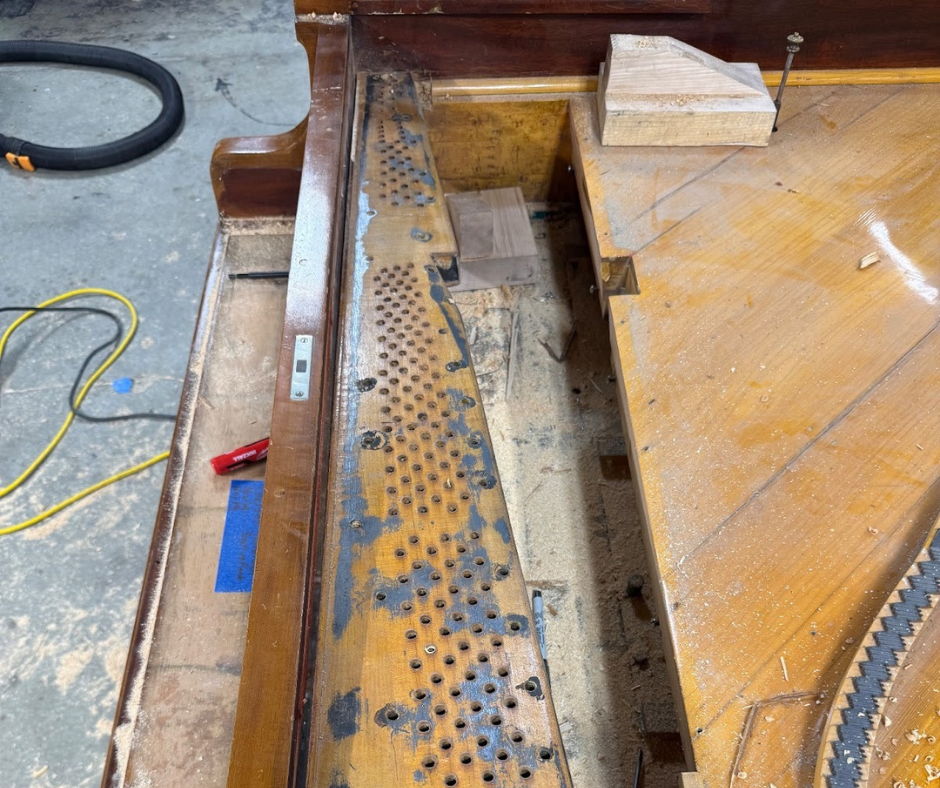
80+ year old pinblock needing replacement
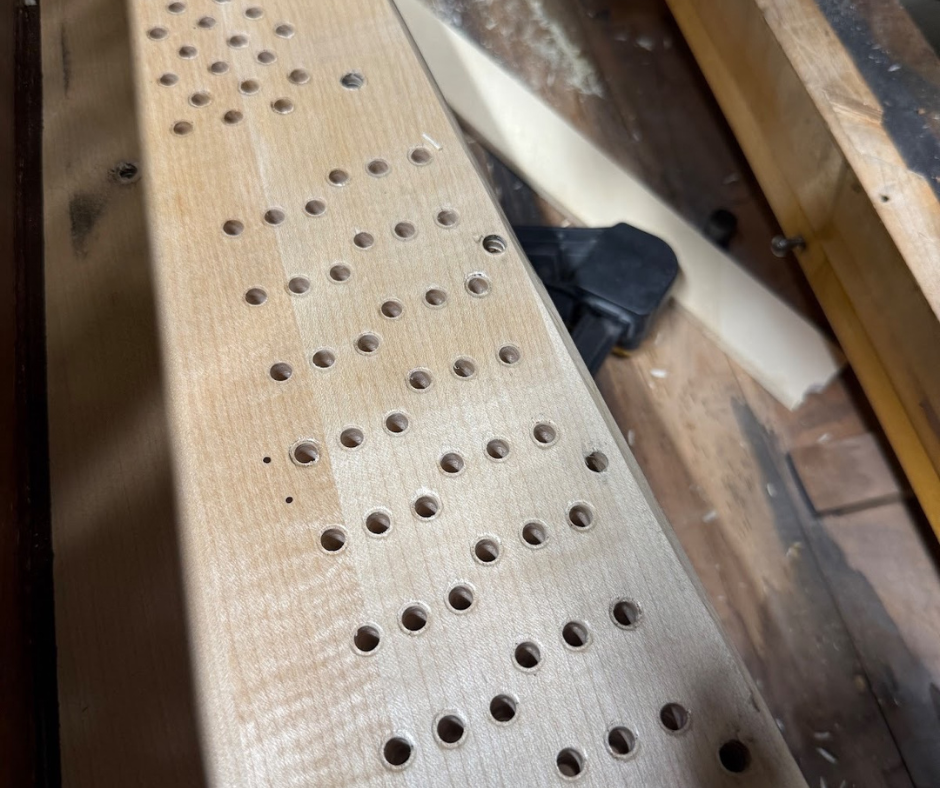
Brand new replacement pinblock
4) Structural Issues
Beyond environmental factors, the piano’s internal structure plays a role.
Pinblock wear: The pinblock is a thick plank of wood that holds the tuning pins. As the piano ages, the wood can lose its grip, causing pins to slip.
Solutions: Restringing with larger tuning pins or replacing the pinblock can restore stability.
Structural issues are less common than humidity or usage problems, but they’re important to address—especially in older instruments.
Final Thoughts
A piano is a living, breathing instrument that reacts to its surroundings. Regular tuning, thoughtful placement in your home or institution, and proactive care can keep your piano sounding beautiful for decades.