
How to care for your piano during the winter
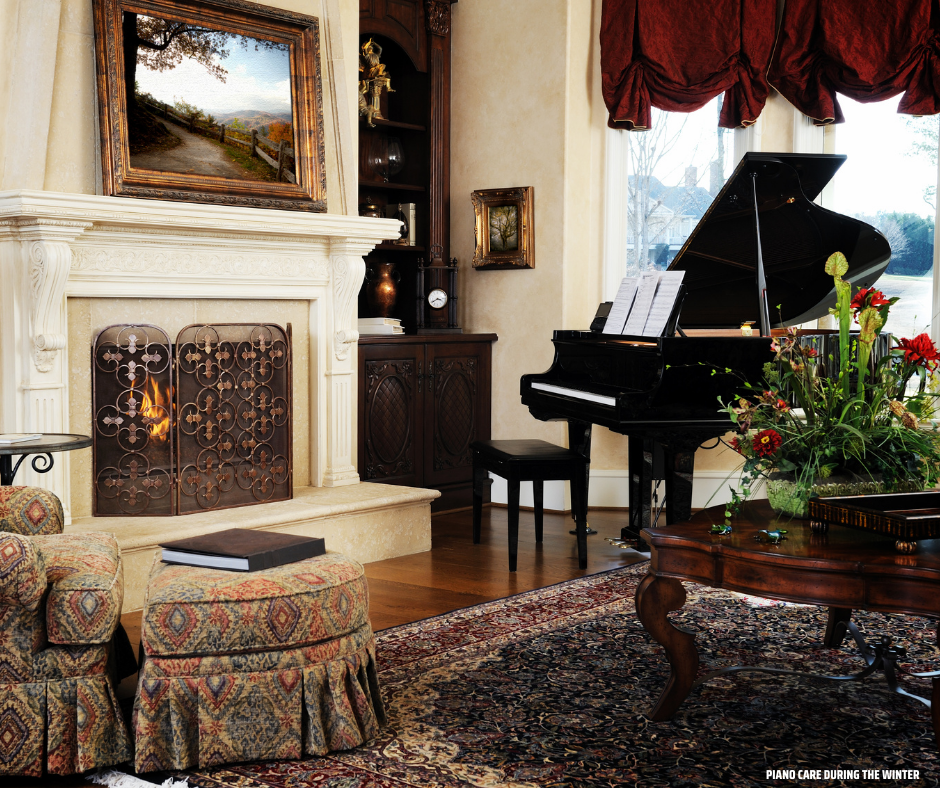
How to care for your piano during the winter
As the temperature drops during the winter season, so does the humidity in the air. You may notice gaps in your wood floors that weren’t there in the summer, or that old door that always sticks now opens freely. It’s all due to humidity. Wood is sort of like a sponge. It soaks up moisture from the air and expands and shrinks back when the humidity falls. The piano being primarily made of wood, does the exact same thing. If the relative humidity gets too low, the sensitive wood can crack and permanent damage can occur and the soundboard can crack. The first step in protecting your piano is keeping an eye on the humidity of the room. A simple and inexpensive hygrometer will tell you what the approximate humidity level is and if it is fluctuating. We recommend keeping pianos at 30-60% humidity year round.
Tips on keeping your soundboard from cracking
Avoid putting the piano near a wood fireplace. While the occasional fire is fine, if you have a fireplace or stove as a primary heat source, keep your piano in another room.
Keep the piano away from frequently opened outside doors and windows - the sudden blast of cold air can be harmful over time
Do not place your piano on a radiant heat floor without a protective rug
Do not place your piano directly over or under and air vents
Use a whole house humidity control system
Install a piano specific humidity control system such as Piano Guard
The Piano Guard System: A Modern Solution
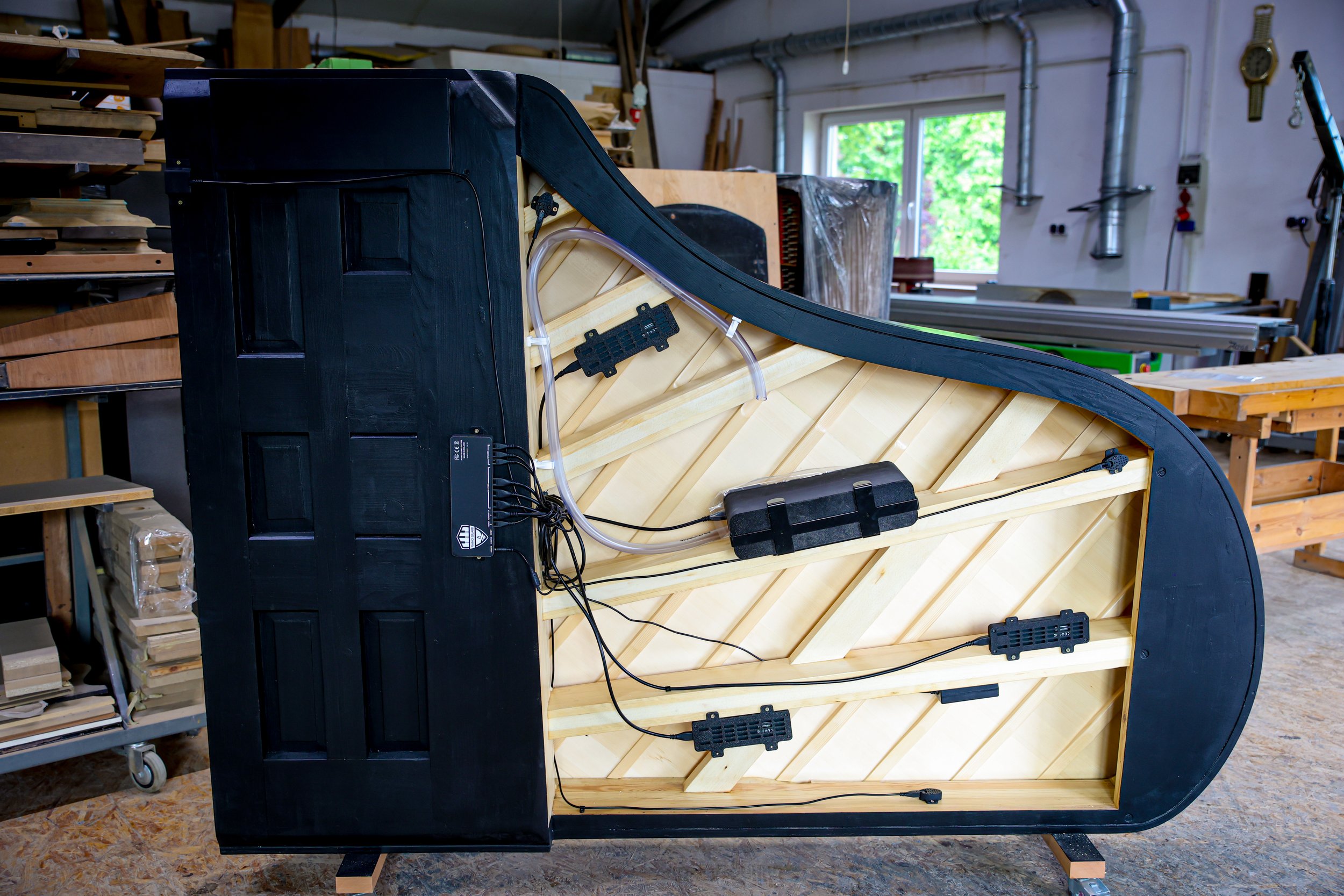
Piano Guard System
The Piano Guard System is designed specifically to protect pianos from unstable microclimates. Unlike general room humidifiers, it focuses directly on the instrument itself.
Key Features
Microclimate control: Maintains humidity between 45–60% and stable temperature around 20°C.
Real-time monitoring: Tracks conditions via mobile and web apps.
Smart alerts: Reminds users to add water or replace cellulose pads.
Comprehensive protection: Safeguards wood, strings, felt, and metal components.
By creating a controlled environment inside the piano, the system prevents the chain reaction of damage that winter dryness often triggers.
Comparison: DIY vs. Piano Guard
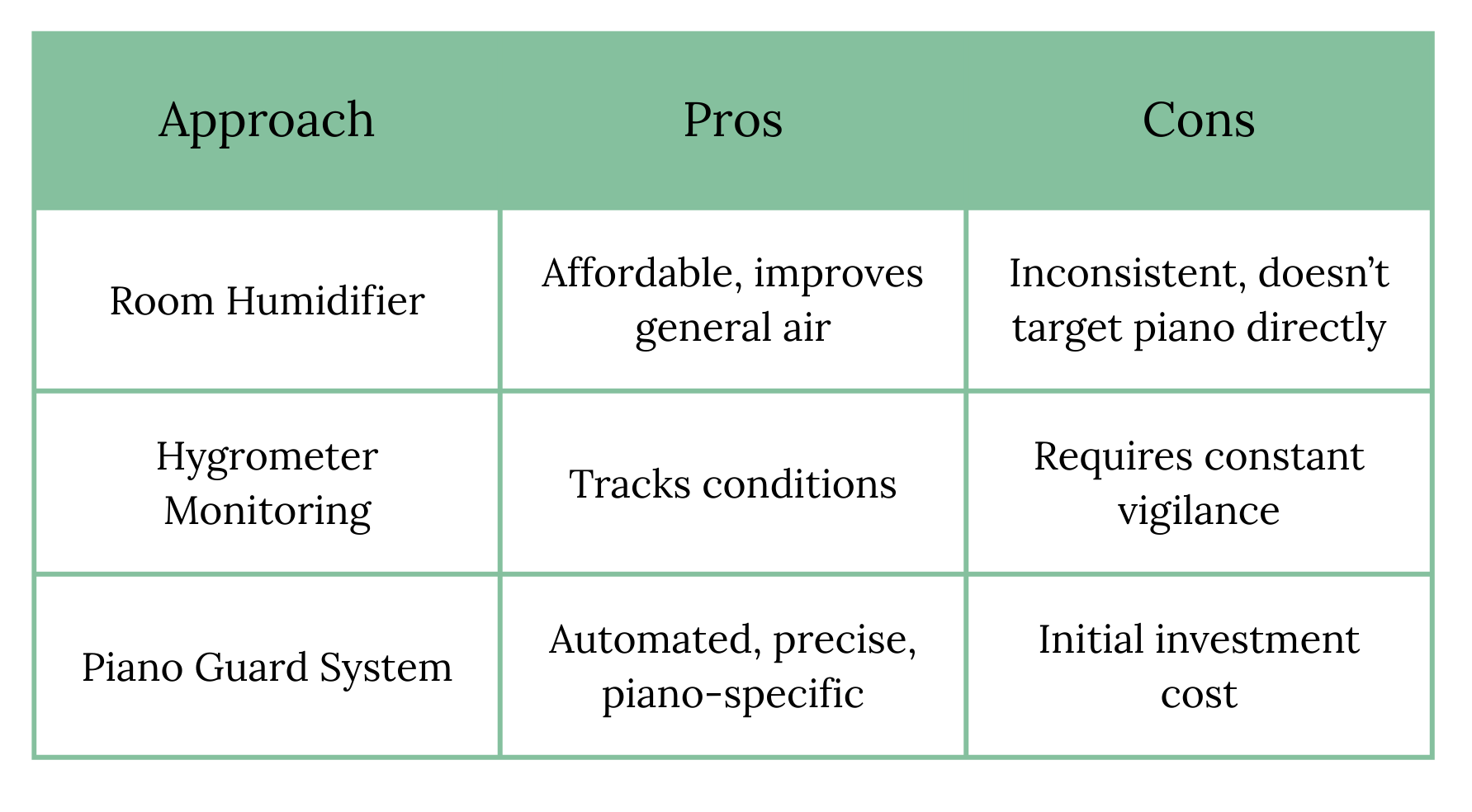
DIY vs. Piano Guard Pros & Cons.
Verdict: While DIY methods help, the Piano Guard System offers peace of mind by automating care and ensuring consistent protection.
Long-Term Benefits of Humidity Control
Investing in proper humidity management isn’t just about avoiding repairs, it’s about preserving the soul of your piano:
Stable tuning: Reduced need for frequent adjustments.
Enhanced tone: Resonant, balanced sound year-round.
Extended lifespan: Protects structural integrity for decades.
Financial savings: Prevents costly repairs like pinblock replacement or soundboard restoration.
For professional musicians, teachers, and enthusiasts alike, maintaining humidity is an investment in artistry.
Final Thoughts
Winter doesn’t have to be a season of worry for piano owners. By understanding the risks of low humidity and taking proactive steps, you can safeguard your instrument’s beauty and sound.
While traditional methods like humidifiers and careful placement help, the Piano Guard System provides a comprehensive, piano-specific solution. It not only stabilizes the microclimate but also empowers owners with real-time monitoring and alerts.
MSRP $1200 - Winter price $999 installed.